

Text: Trevor Padgett
Holding a butterfly net and an empty bucket, I stand alone on the shores of Banana Bay watching the sun set. As it dissolves below the turquoise horizon, day blends into night. Behind me light from the rising full moon sneaks through the trees: it is time to get to work.
I click my headlamp on, sending a beam of light cutting through the darkness. It guides me up the beach, over the ancient coral rock, through the thick coastal forest and, eventually, to a highway.
I am no longer alone.
What on any other night would be a dark stretch of road is tonight spotted with lights, forty or fifty people who are, just like me, carrying nets, buckets, and flashlights. Together, we are searching for one of Hengchun Peninsula’s most secretive inhabitants: land crabs.
We are not just looking for them; it is their spawning migration season, and we are trying to save their lives.

Photo credit: Trevor Padgett
I have volunteered with the Banana Bay Land Crab Spawning Migration conservation project for 5 years, but I originally got involved quite by accident: I chose the scenic route home.
Let me explain. A forest ecologist, I was driving home after a long day working in the mountains. At a red light I had two roads to choose from: one road lead directly to Hengchun, my home; the other around Hengchun Peninsula’s coast before taking me home, one of the most beautiful coastal roads in Taiwan but one I seldom travel. When the light turned green, I chose left and headed for the coast. After a long day of mud, thorns, and heavy backpacks carried up steep slopes, I had earned the scenic route home.
And this decision changed my life.
Nearing the end of my coastal detour I crested the small hill that descends into Banana Bay. Against the rich black asphalt I noticed a small smudge of mottled-brown – a crab, mindlessly crossing the busy highway. Instincts kicking in, I pulled over, and stood at the side of the road, eyes simultaneously fixated on the courageous crab slowly approaching the centre yellow line and the speeding cars barely missing it. I nervously watched both.
A gap in traffic finally came, and I lunged into the road and scooped it up. Standing in the middle of the road, vehicles continued to scream past me, but I noticed one car slow down, pull to the side, and stop.
Lights flashing.
Police.
The officer driving rolled down his window and waved me over. I nervously approached, unsure of the gravity of the traffic offence I had just committed to save a crab.
“…Yes?” I stammered.
“Thank you…” he said, pointing to the crab in my hands, “and good luck tonight!”. Both officers smiled, and then drove off.
“Good luck…with what?”, I thought to myself as they drove away.
I released the crab on the other side of the road and continued home, confused. Until a few moments later when I drove by a group of bucket carrying, flashlight holding people. Curious, I stopped and asked what they were doing. And then I discovered what needed luck – Taiwan’s land crab conservation project.
The crab I saved, I later learned, was Labuanium scandens (攀爬腫鬚蟹), a recently discovered species of land crab that spends its life almost entirely in large Barringtonia asiatica (棋盤腳) trees in the remaining fragment of Kenting’s unique coastal forest. Had I gone straight I would never have met her. But I took the scenic route, luckily on the same night she left her tree to start her annual journey to the ocean.
And this lucky twist of fate introduced me to a conservation project that has since become my passion.

this is the crab I saved when I met the police
Photo credit: Trevor Padgett

Photo credit: Trevor Padgett
Kenting National Park is home to at least 89 species of land crab, making it one of the most diverse land crab habitats in the world. New species are constantly being discovered.
Most species need to return to the ocean to spawn each year. Not all, though; Scandarma lintou (林投蟹) live their entire lives in Pandanus trees (Pandanus odoratissimus; 林投) and lay their eggs in rainwater collected in the leaf base, and Geothelphusa albogilva (黃灰澤蟹) eggs hatch while the mother is carrying them. However, most species must release their eggs in the ocean.

Photo credit: Trevor Padgett
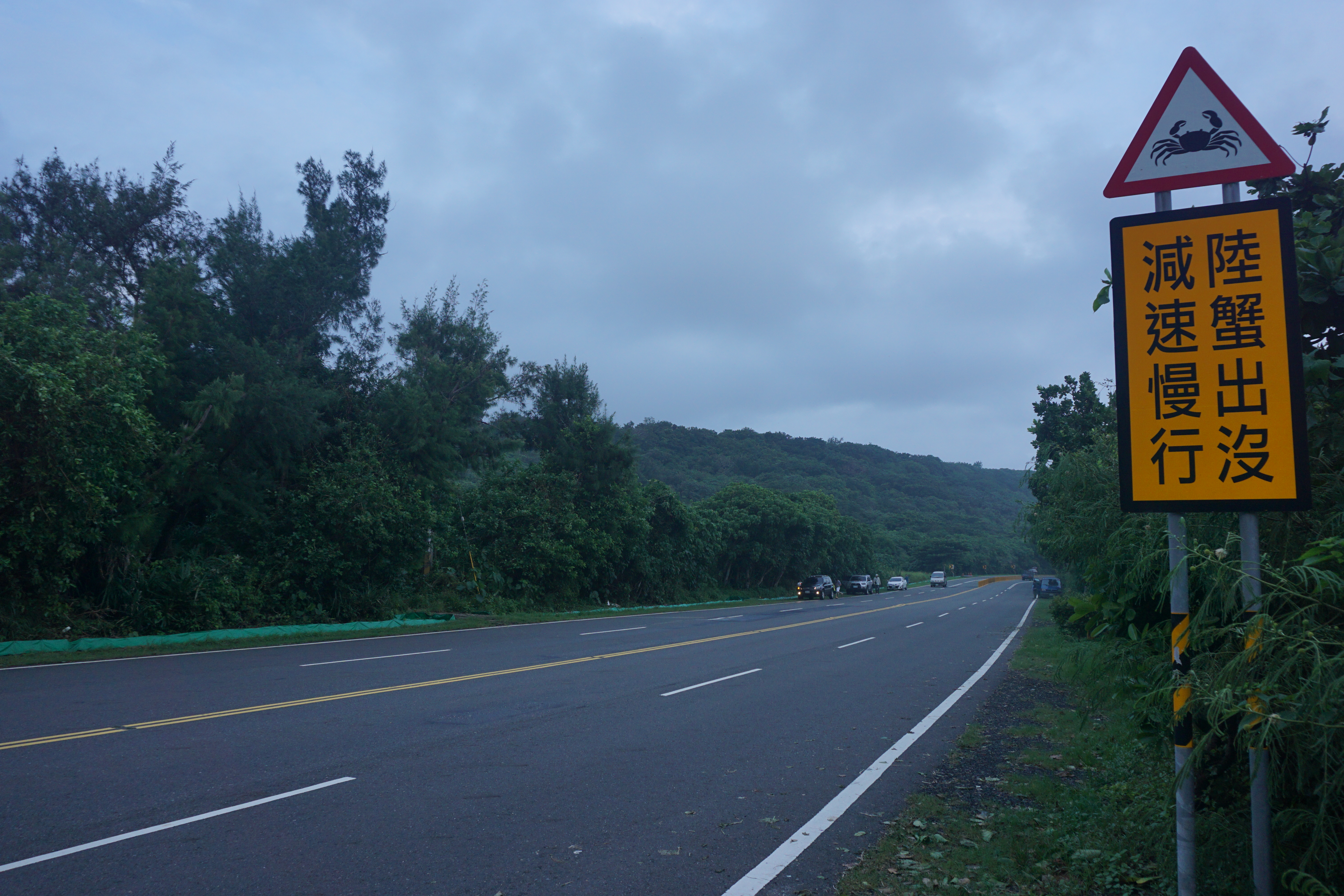
Getting from forest home to ocean spawning grounds is a perilous task because of one thing: Highway #26. For many crabs it is a death sentence. To protect them, a simple conservation program was established. During the migration season, volunteers patrol the highway to catch before they cross the road, carry them across and release them safely on the beach. It is simple, but it has a secret power: people willing to help.
And every crab matters. A single female carries hundreds (Metasesarma aubryi; 奧氏後相手蟹) to hundreds of thousands (Cardisoma carniflex; 兇狠圓軸蟹) of eggs. The most common species in Banana Bay, Discoplax hirtipes (毛足蟹圓盤蟹) and Discoplax rotunda (圓形圓盤蟹), have been recorded with over 500,000 eggs per crab.
Each mother saved is half a million opportunities for life.
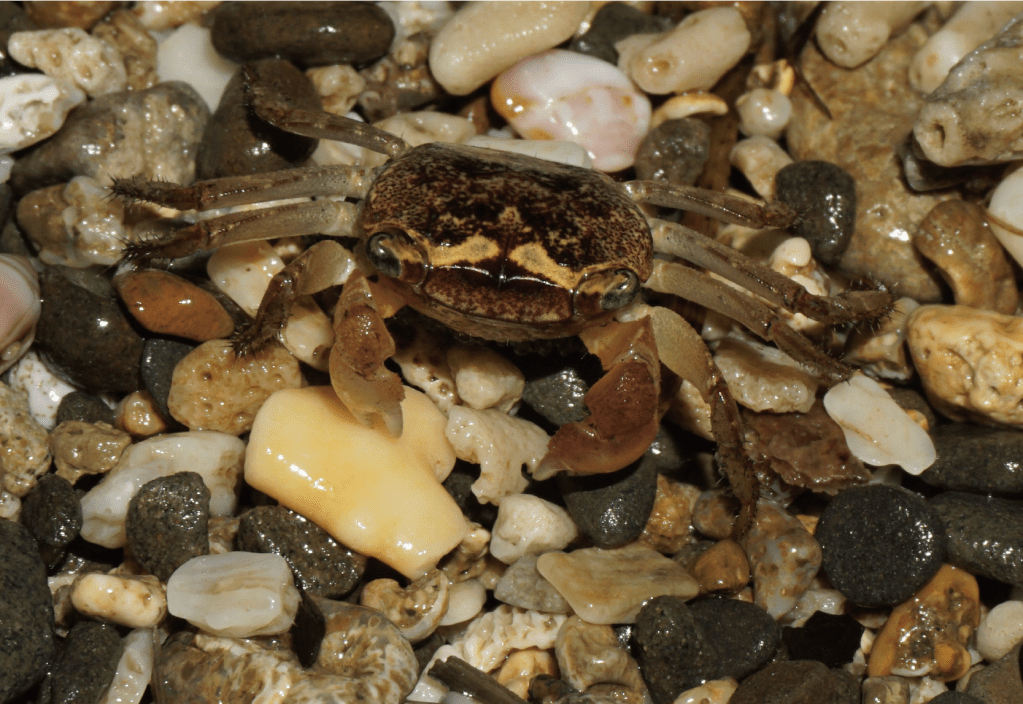
Photo credit: Trevor Padgett
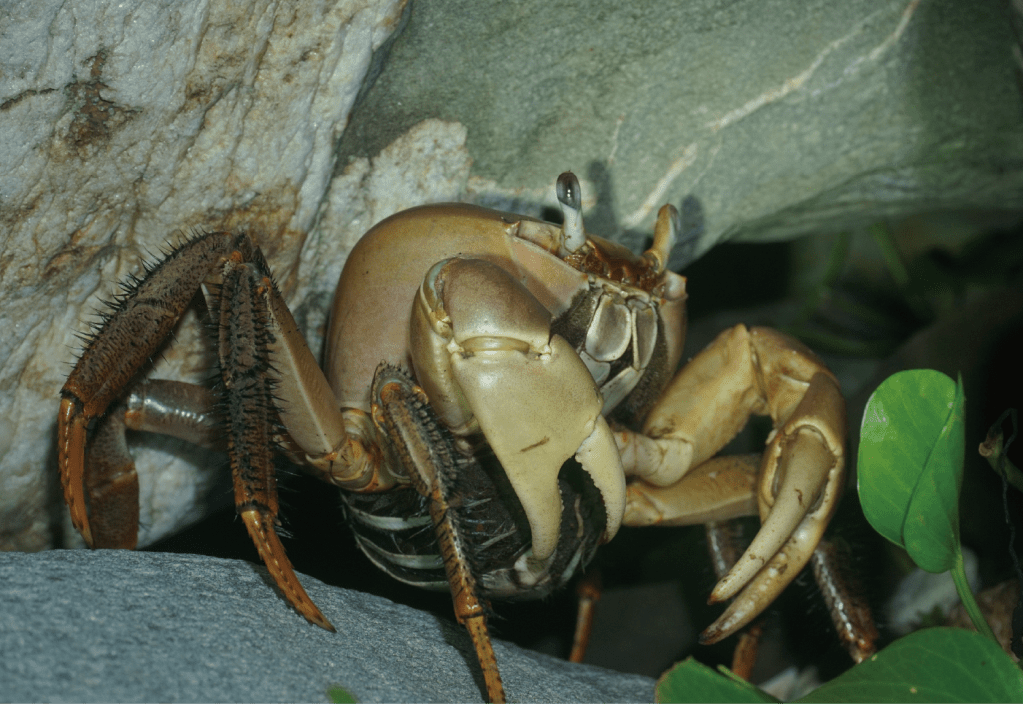
Photo credit: Trevor Padgett

Photo credit: Trevor Padgett
Over the years I have met many people on this road. I am impressed by the number of people who, like me, see the trail of flashlights and stop to ask; I am overwhelmed by how many get out of their cars to help.
Three years ago, I met a couple visiting Kenting from Taipei. On their way home from dinner, they stopped on the side of the road and asked me what everyone was doing. I introduced to them the crabs, explained where they live, where they were going, and why we were helping. Sensing their interest, I offered them my spare net. We spent the rest of the night together catching crabs, and when the night was over, we said our goodbyes and parted ways.
A year later, on the same stretch of road, familiar voices called my name. “Remember us”? they asked?
Kenting’s land crabs had caught their hearts. In the year since we met, they had been volunteering at local schools, teaching Taipei area kids about Kenting’s hidden secret. “This year”, they said, showing me a video camera, “we are making a small documentary about the crabs”.
This is the power of such a publicly accessible conservation program. It is not just about solving a problem, it is about helping people better understand their own home.



I lay on the edge of an overhanging rock and watch a crab silently slip into the sea. Rain drizzles on my shoulders as my headlamp illuminates the patch of water and I watch her release her eggs. The tired mother rests in the water while her ruddy-brown eggs float away. She and her eggs survived this year.
Saving the crabs is not just about the crabs themselves, it is about the whole coastal ecosystem. These eggs will not all become baby crabs; only a small percentage will survive to crawl out of the ocean and into the forest. Waiting for them in the shallow water are marine animals that rely on them for sustenance. In the forest, these omnivorous scavengers are vital for nutrient cycling and keeping forests healthy and diverse.
By living a double life – ocean and land – land crabs connect two ecosystems. Time and evolution took them out of the water, but in homage to their ancestry they remain the keepers of both.
But now, the keepers need our help. Your help, too, if you are willing.
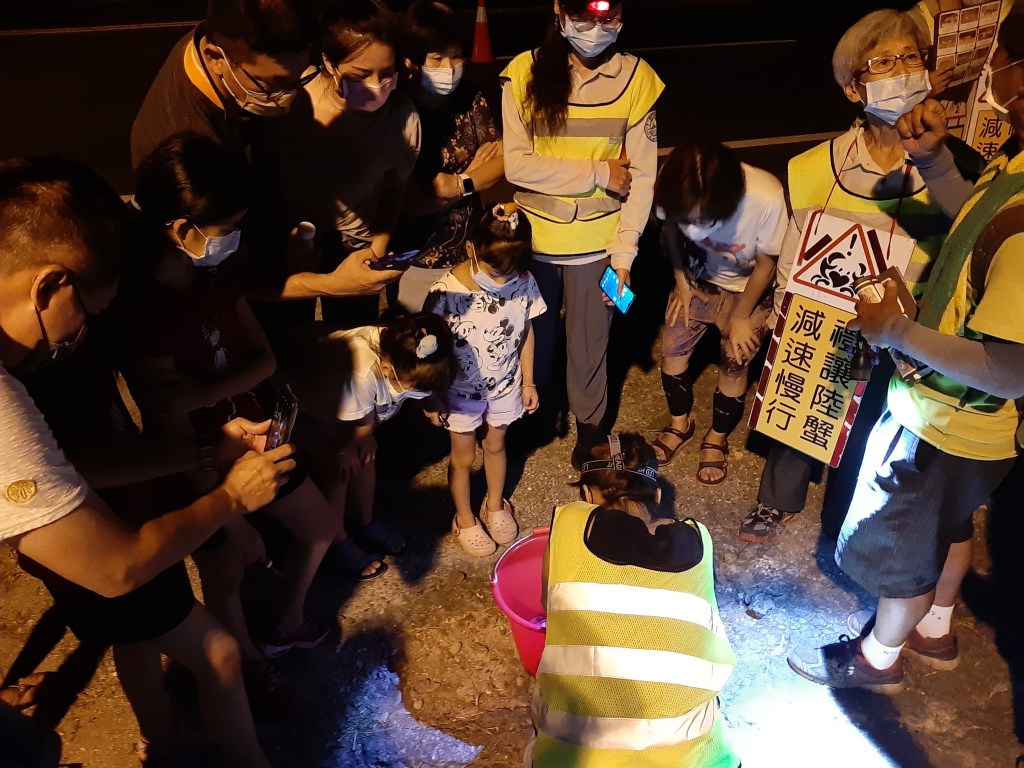
Photo credit: Trevor Padgett
 Seeding Future