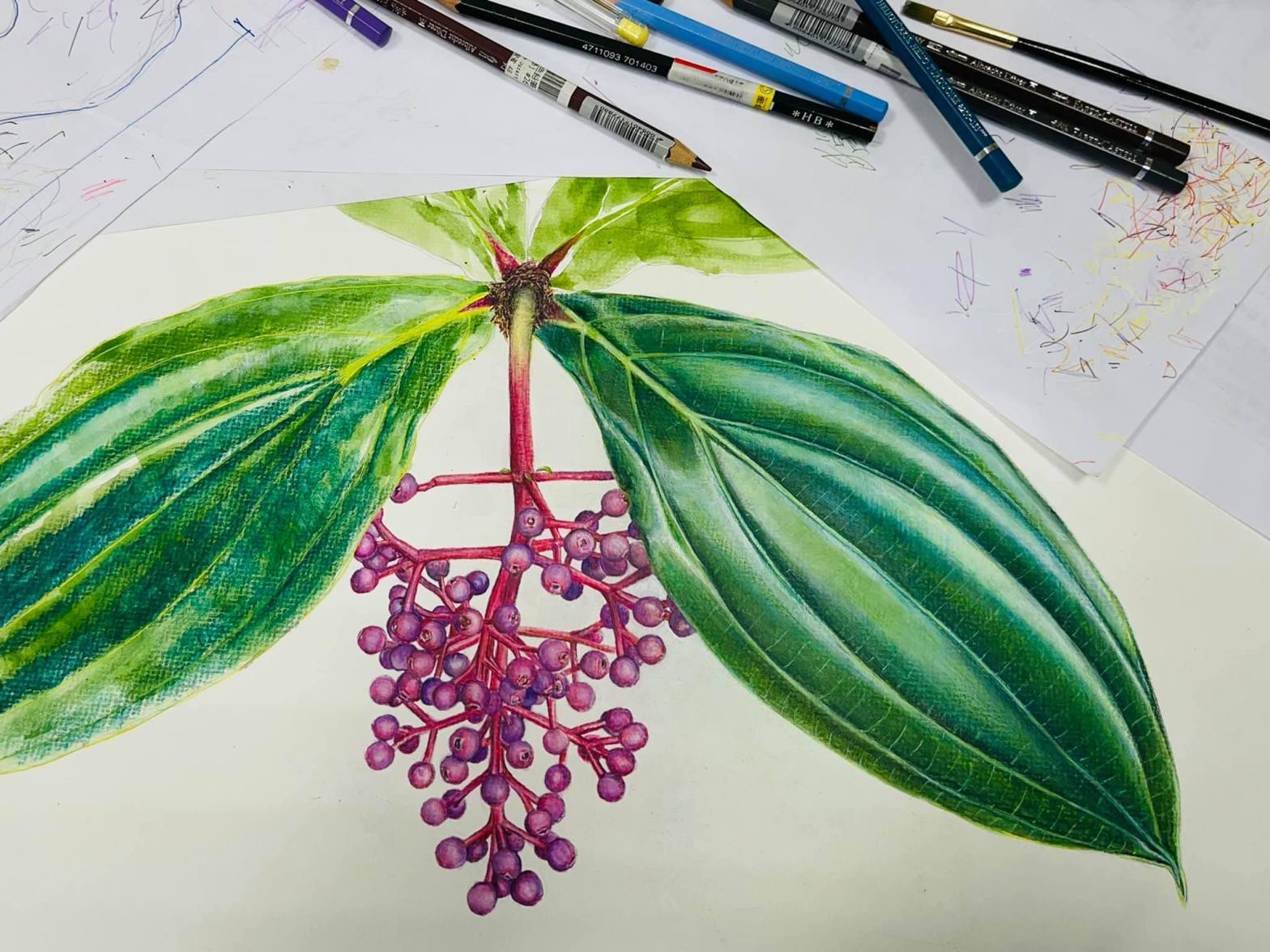
[ work & story sharing _ from Hsin-Chieh Hung ]
Central Taiwan is the most developed market for horticultural florists. As a central Taiwan native and a fan of tropical rainforest plants, I am no stranger to Formosan medinilla/Taiwan medinilla, which is one of the few native species in Taiwan with great ornamental value and popular in the horticultural market.
When I was in my twenties I bought a medinilla plant form a florist and planted it at home. Then, one day in the summer of 2004, I went on an expedition to the Hengchun Peninsula to collect plants in the virgin forests of Laofo Mountain. There, each tree has become a community, co-existing with other plants, insects, and numerous other animals that grow and live on and in them. The higher the altitude, the richer the diversity becomes. Naturally, the most spectacular and eye-catching plant in bloom was the Taiwan medinilla.
It was the first time in my life that I saw a wild Taiwan medinilla. I was so moved that I couldn’t help but exclaim in my heart, “The natural ones are really the most beautiful."
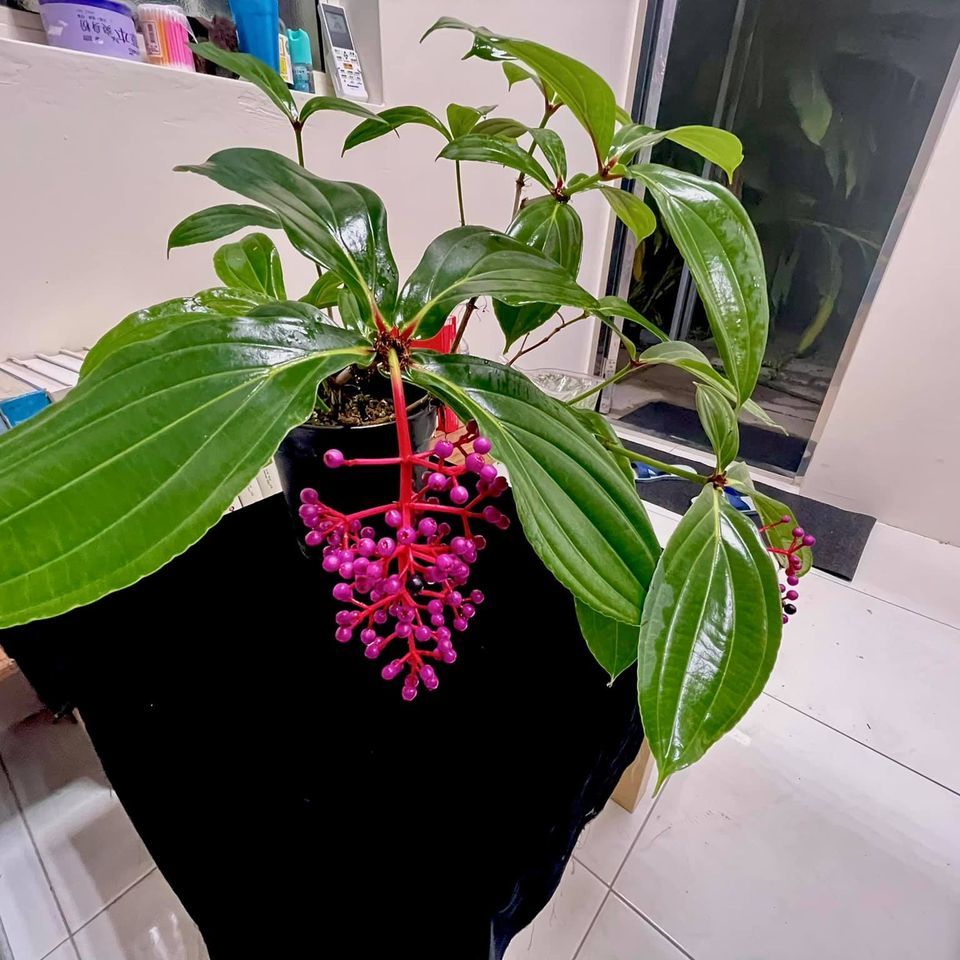
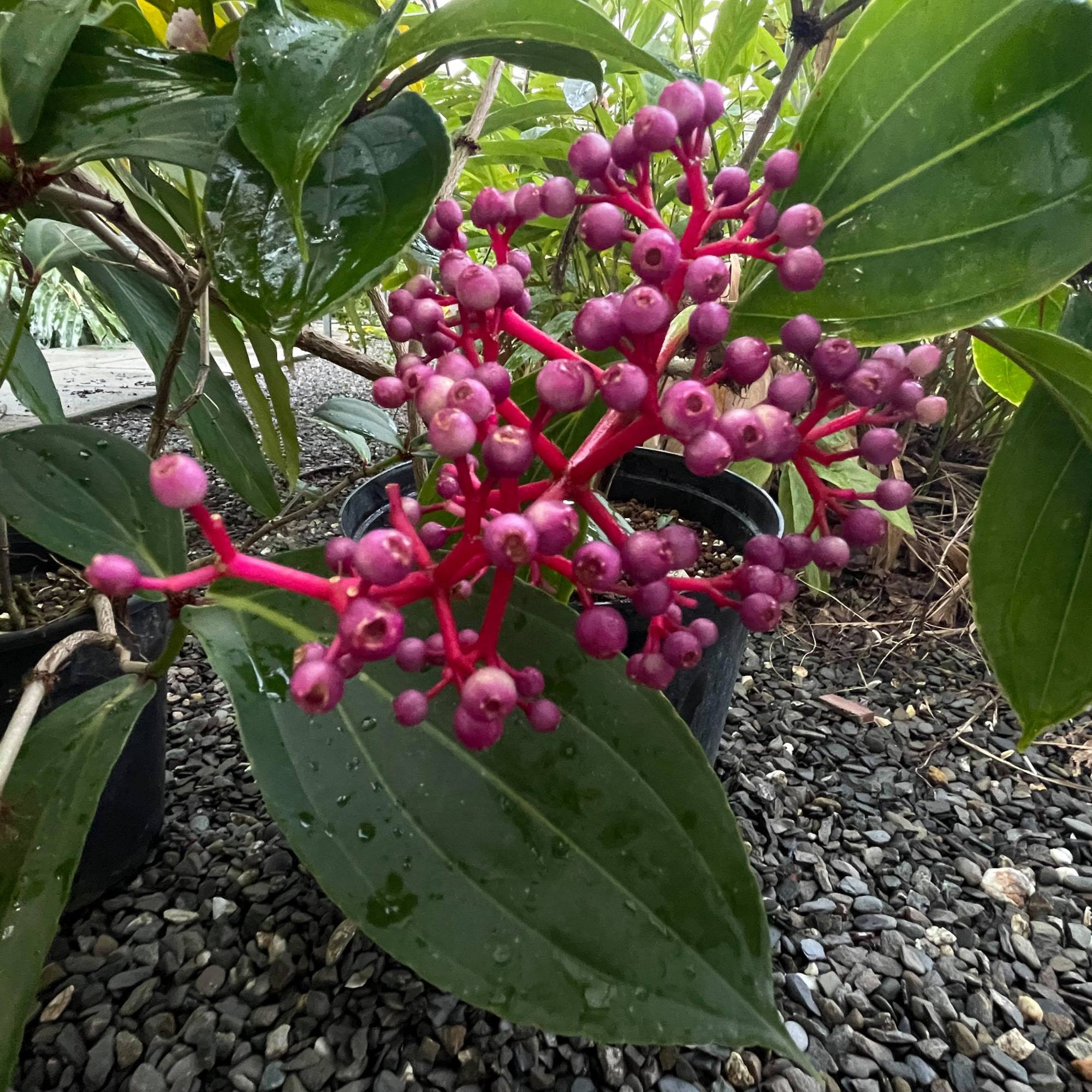
According botanical descriptions, the wild Taiwan medinilla is an evergreen scandent/trailing shrub-like plant. The key words “vine" and “scandent" suggest that this plant grows on the ground and climbs up a tree, yet the potted plants in the flower market looked lush and thick, unlike a climbing vine. The problem, I realized later, is that the plants sold horticulturally are not a single plant but are actually a cluster of multiple cuttings growing together in one pot. Finding Taiwan medinilla growing in its native home on the slopes of Laofo Mountain, I saw that it grows on other plants more like a shrub attached to a large tree. The leaves are ovate-lanceolate shaped, shiny and smooth, and are arranged oppositely or in whorls. The bright red cymes form cone-shaped inflorescences extending from the ends of the branches. The flowers consist of four white to pink-white ovate petals surrounding purple pseudostamens. The fruit are spherical berries that are at first purple-red then turn purple-black when ripe. This beautiful and special plant is endemic to Taiwan, growing only in the Hengchun Peninsula, and is one of the most representative of tropical rainforest plants.


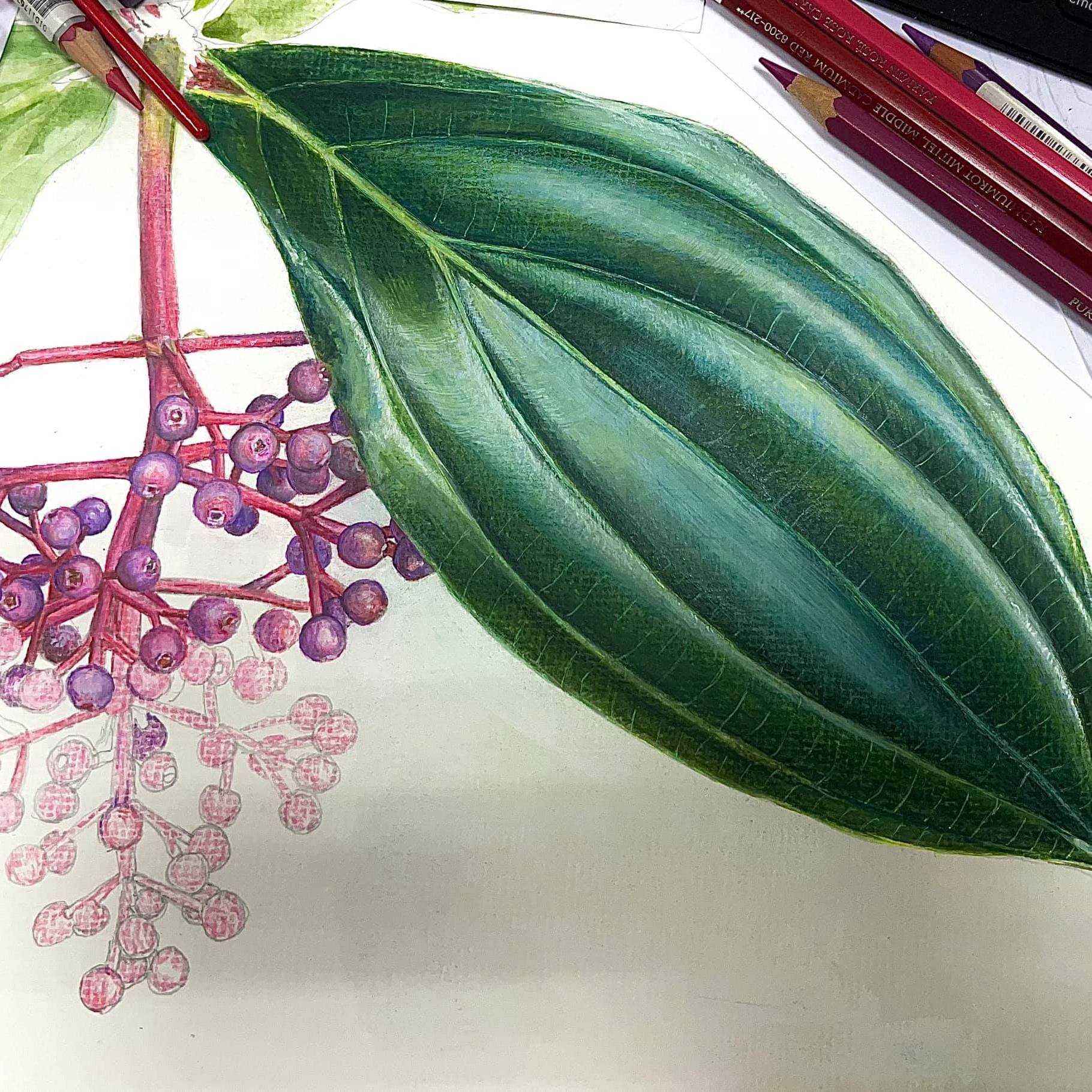
My love for Taiwan medinilla has never diminished with the passage of time, and I have produced hundreds of seedlings from cuttings and seeds. In terms of ecology, I have surveyed more than 30 sites across Taiwan medinilla’s entire range in the Hengchun Peninsula and collected at least five or six specimens. In terms of art, I have taken pictures and drawn illustrations of this beautiful plant. Beyond the art, I have risked my life by climbing high up on rock walls and within tree canopies to collect the branches and fruits.
What else can I do for the Taiwan medinilla?
[ 繪畫 & 故事分享 _ 洪信介 ]
台灣中部是園藝花店市場最發達之地,生為一個中部人,一個迷戀熱帶雨林植物的玩家,對於台灣野牡丹藤並不陌生,畢竟她是台灣少數原生種裡極具觀賞價值又受園藝市場歡迎的植物。
二十多歲時就買過一盆回家種植玩賞,直到2004年夏天某日去恆春半島的老佛山探險採集植物,那次,翻過一座次森林來到海拔450公尺處綠蔭繁茂的原始森林。這裡,每棵大樹並不是只有大樹本身而已,而是還附著其他植物,甚至是動物和昆蟲的棲身之地,隨著海拔越高物種越豐富,其中開花最壯觀最吸睛的植物,自然是台灣野牡丹藤。
那是我人生第一次見著野生的台灣野牡丹藤,那當下的感動,不免在心中讚嘆一聲「果然天然的最美啊~」
資料顯示野牡丹藤屬常綠蔓狀灌木植物,也因為「藤、蔓」等關鍵字,讓我一度誤以為她是由地面攀爬而上的植物,而花市裡的盆栽則是很多支條扦插而成,以至於每一盆看起來都茂盛。看到原生地之後知道台灣野牡丹藤是攀掛於其他植物上,更像是附著在大樹上的灌木。葉表面油亮光滑葉,十字輪生或對生倒卵狀披針形,紅色聚繖花序組成圓錐花序自枝端伸出,白色至粉紅卵形花瓣4枚,紫色假雄蕊,紫紅色漿果球形,完熟時紫黑色。如此艷麗特別的植物,是台灣特有種,僅長在恆春半島,也是極具代表性的熱帶雨林植物之一。
我對於台灣野牡丹藤的喜好,從來沒有因為時間流逝而減少,園藝方面我扦插枝條及種子播種繁殖她,生產出好幾百棵苗木。生態方面我一整個恆春半島棲地調查超過30個點,標本採集號起碼也有五六號。藝術方面,靜態的就拍照畫圖,行動上,則是冒生命危險徒手攀爬至高高的石壁、大樹上將枝條、果實採下來~
關於台灣野牡丹藤,我還能為她再做點什麼呢?



English proofreading: Trevor Padgett
Drawing photos: Hsin-Chieh Hung
Photos of Formosan medinilla/Taiwan medinilla: Peter’s blog、Taiwan Plants
Reference: 熱帶森林中的稀有攀緣植物—蘭嶼野牡丹藤
 Seeding Future