The article is the second of a two-part series on our ten-day journey across the rainforests in northern Sumatra.
Research has shown that our rainforests is changing. They are becoming more susceptible to destruction, including man-made and naturally occurring fires. These dense, moist forests are often referred to as the lungs of the Earth because they produce a high percentage of oxygen into the atmosphere and are vital to slowing down global warming.
The Leuser Ecosystem is recognized as one of these tropical rainforests rich in biodiversity and, if disappear, would leave an irreplaceable hole in our natural ecosystem.
It is, unfortunately, diminishing at an alarming rate.
What drew us to the Southeast Asian island of Sumatra was not only to experience the wilderness, but we wanted to understand what we, as scientists, journalists, entrepreneurs, and artists, could do to help raise awareness and preserve the natural habitat.
We were accompanied by a team at HAkA, a non-governmental organization based in Aceh specializes in rainforests and wildlife protection. The organization manages two of the four research outposts in the region–Soraya Research Station and SUAQ Balimbing Research Station–which we stayed at during our ten-day journey in the Leuser Ecosystem, which spans across the provinces of North Sumatra and Aceh.
Indonesia’s disappearing rainforests
When we cruise down the Alas River en route to SUAQ, at first glance, the shrubs and forests in the protected rainforest reserve appear lush and green, but shortly, signs of human disturbance were difficult to ignore–patches of land exposing bare soil underneath, the water in the river barely knee-high, and fishing boats whizzing by filled with palm oil seeds.
The rangers who have been traveling to the rainforest for several decades noted the intensifying dry seasons, which caused the river’s water quality to lower. Many of the wildlife in the forest and in the river, many critically endangered, are losing their natural habitat.
The Leuser Ecosystem makes up the largest carbon sink in Asia. Deforestation and land-clearing activities which have increased in recent years not only caused the rising temperature in the region, but air pollution-related diseases, and even deaths.
Initiatives by local conservationists, activists, and indigenous groups are putting in the efforts to slow down the accelerating process. Each of them possesses deep knowledge about the trees and the wild creatures living in the rainforests, and what keeps the ecosystem in balance.
By assisting international research study about the local rainforest ecosystem and promoting local conservation activism. They have been doing their part of preserving natural resources in the area, perhaps long before any sense of urgency set in for the rest of us.
One of them is a professor at Banda Aceh who studies local butterfly species, who we nicknamed “Mr. Butterfly” is a thinly built Indonesian man with a signature mustache. He comes to Soraya Research station every few years for his study. He’s filled with fun facts about the local insects such as the mud-puddling butterflies that suck essential minerals off damp patches of ground and the bees that build underground nests.
Ibrahim is a research assistant with Leuser Conservation Forum (FKL) that works with resident researchers coming from all over the world in their studies and help collect data. He has spent the past thirty years in the rainforests. He could name out most of the wildlife inhabit in the forest, and the trees and the fungi that grow from the rainforest ground.

For Ibrahim, changes come through learning about the forest and understanding that each living thing helps maintain the fine balance of the ecosystem. Ibrahim believes through research and collaboration, there can be a positive impact on the forest ecosystem. “Raising awareness can be done locally and internationally,” said Ibrahim, “having people from other countries that come here to conduct research and projects and share knowledge about what is going on on the ground is important.”
Recovery
Efforts to preserve the Leuser Ecosystem has not been without tribulation.
The Soraya Research Station is one of the few things that survived the the conflict in Aceh. It was burned to the ground during the turbulent period of political uprising, so badly damaged that it had to be closed down. It remained unoccupied for 15 years. Local organizations, including FKL, helped rebuilt the research outpost and bring it into operation in 2017. During the turbulent period, the number of international researchers declined sharply.
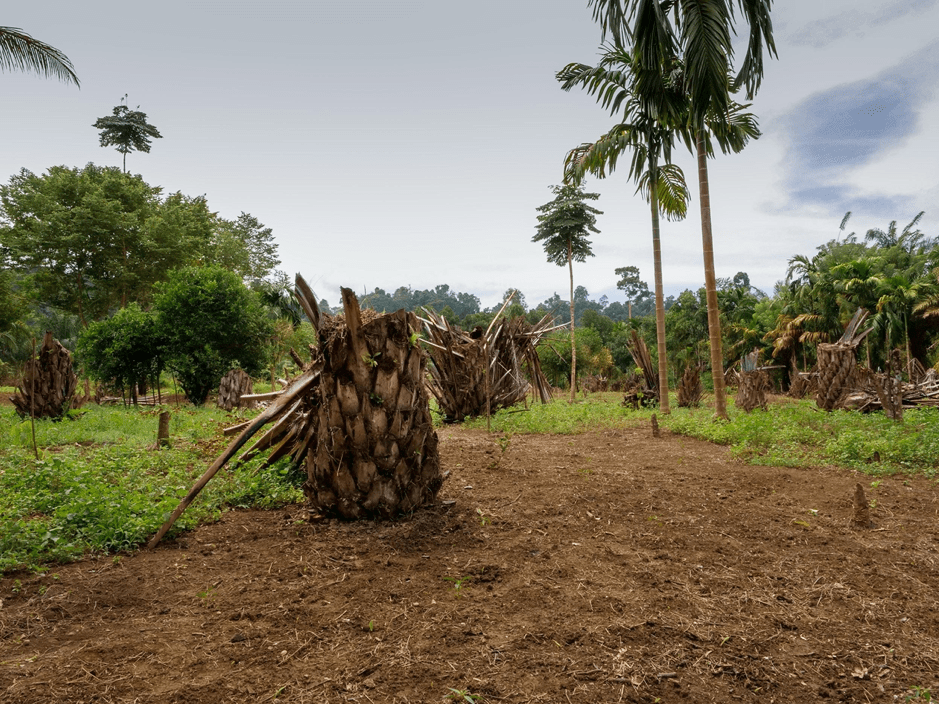
However, today the conservation efforts have sprung into action. The organization set up “recovery sites" around monitoring outposts. At both Soraya and Suaq, they purchased hectares of land from the owners of palm oil plantations, cut down the trees, and repopulate the area with seedlings of a mix of native trees and fruit trees such as durian, betel nut, and snake fruit trees. The wildlife is expected to come back to the stored land. They do so in collaboration with locals from neighboring villages, who get to keep all the proceeds from the fruits they harvested.
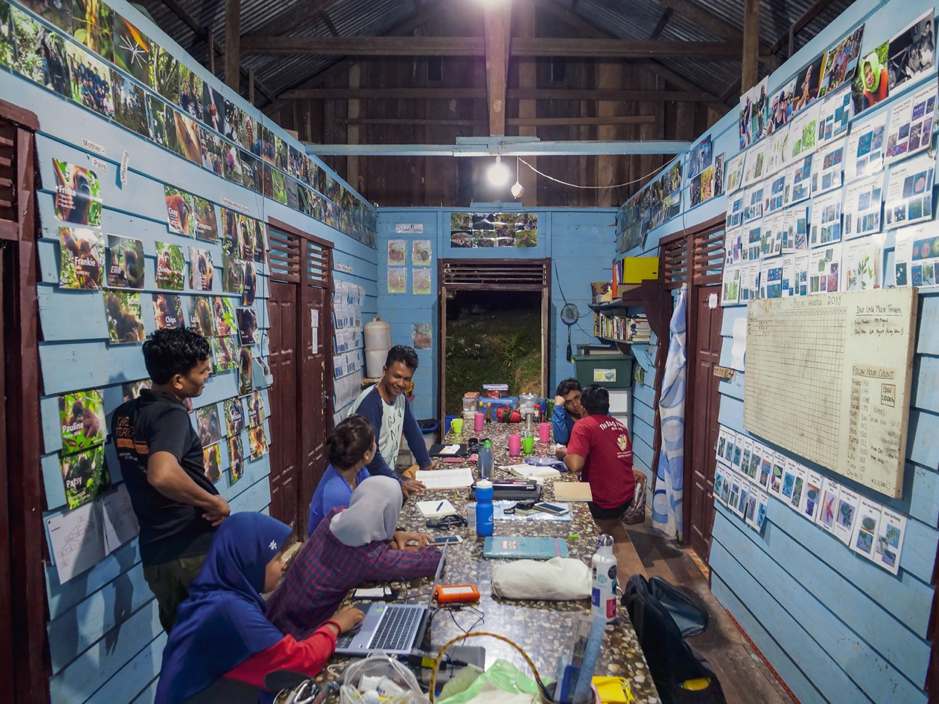
It is something a very positive result yielded from years of conservation efforts that researchers are traveling from Europe, the Americas, and other parts of the world to the Sumatra island to study orangutans and the local ecosystem, said Subhan, camp manager at SUAQ Balimbing Research Station, which was born out of a collaboration between the University of Zürich, Sumatra Orangutan Conservation Project (SOCP), and the Universitas Nasional Jakarta (UNAS).
The research station not only works with international organizations and institutions but also the local communities downstream in terms of socialization and education. At present, there is the camp runs an education program at primary schools in the area, which is expected to extend to middle and high school in the near future.
“They [the locals] are more aware of why protecting the forest is important to their communities and of the fact that orangutans exist nearby where they live,” according to Subhan, speaking from three years of experience managing the outpost. Through education, they are now taking more active roles in preserving the local rainforest ecosystem.
“During the time when the camp didn’t exist there was a lot of illegal logging and encroachment activities nearby the river,” he added.
More hurdles ahead
Expansive national reserves like Leuser Ecosystem, though by law, are protected from poachers, loggers, and criminal activities, enforcement is often lacking and left largely unmonitored by government officials.
Lax oversight on curbing palm oil activities in the national park is further complicated by the murky land rights regulations in the country, where indigenous groups often claim ownership to more land than they are entitled.
Local conservation efforts are facing strong headwinds as the Indonesian economy expand and the government puts economic growth above all else.
In recent years, some countries in the West have started to wake up to the environmental consequences of the booming palm oil industry in Southeast Asia. The European Commission set an example by passing a measure earlier this year to phase out palm oil-based biofuels by 2030, exploitative practices have also been condemned by the international community.
However, high demand for the crop from neighboring countries, India and China, continues to keep the engine of the palm oil industry running. These large markets are big enough to create demand for the palm oil industry to grow unfettered.
Recently, the Chinese government’s decision to end palm oil import quotas received support from the Indonesian Palm Oil Association (GAPKI), whose sentiment echoes with the government’s.
The country’s president, Joko Widodo, who has made it clear the country will continue to prioritize development projects and job creation. Regarding the difficulty for investors to obtain licenses to exploit forest areas, Widodo infamously ordered his environment minister to “close your eyes [and] issue permits as quickly as possible.”
Earlier this year, the government advised palm oil companies not to share their plantation data with other parties, including external consultants, NGOs, and multilateral and foreign agencies.
The Indonesian president’s decision to move its political capital to Kalimantan, Indonesia’s section of Borneo and home of orangutans and rainforests, spark fresh concerns.
Conservation through art
It has become clear to many that climate change is one of the biggest challenges our generation has to face. And more than ever, there is a heightened awareness about rainforest protection, partly because of the Amazon fires in recent months that captured the world’s attention.
It is important that not only that local activism and grassroots initiatives to roll into action, but that everyone to take part in it.
Learning and understanding nature is not purely a scientific process but also an artistic one. Whether it through observing the visually rich patterns, shapes, and colors in a rainforest, or appreciating the rhythms and melodies made in the natural world, or simply let ourselves be creatively inspired by the unruliness of the wild.
Our journey to Sumatra, organized by Suaveart, is part of a larger project that aims to inspire and encourage creators and artists like us who care about our natural habitat and hope to raise environmental awareness.

 Seeding Future
Conserving Sumatra in the face of changing climate 有 “ 4 則迴響 ”