In early August, I went on a ten-day journey across the Indonesian provinces of North Sumatra and Aceh. The trip was part of a larger project started by a group of conservationists from Indonesia, and the art institute form Taiwan whose mission was to inspire action and encourage like-minded individuals who care deeply about protecting the rich natural habitat in Indonesia.
At the crack of dawn, we load our belongings in a mini-van in front of a Hotel in Medan, the capital of the North Sumatra, and prepare for a nine-hour bumpy ride through muddy and hilly paths eastward.
We arrive at a small fishing village just before sunset and hop on a narrowboat with our gear and backpacks. Our boat travels up along the Alas River, the setting sun dimly lights up the sky in yellow gold. Except for the splashing of waves and rumbling of the motorboat engine, it is quiet and peaceful as the evening fall. Not long after, we finally arrive at the Soraya Research Station.
The outpost is located in the Leuser Ecosystem, which composes of 2.6 million hectares of rainforests, peat swamps, and meadows spanning the northern Sumatra. Globally, it is recognized as one of the richest natural rainforest ecosystems and is the only natural habitat where critically endangered species like orangutans, rhinos, elephants, and tigers co-exist.
The natural ecosystem is diminishing at an alarming rate due to both human development and climate change.

Kingdom of oil palms
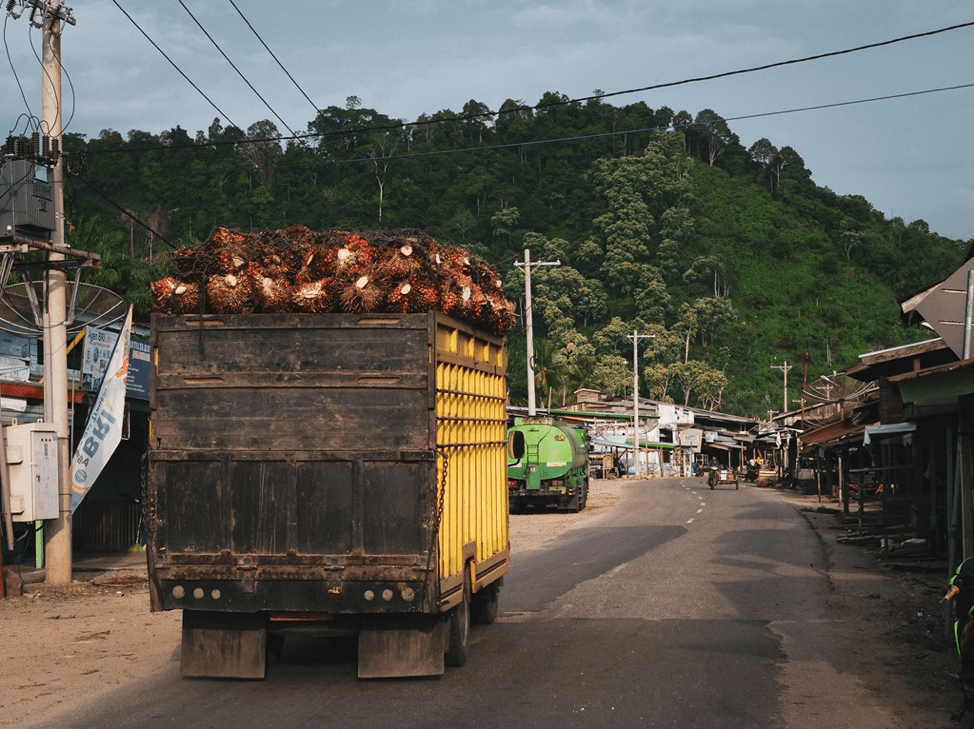
In daylight, patches of oil palms scattered in the lush greenery on both sides of the river and the narrowboats filled with glazed black and bright red seeds of oil palms roaming back and forth the river are tale-tell signs of the burgeoning palm oil industry activities in the area that is supposedly under protection.
We are advised not to use snap photos of the illicit activities.
The oil palm industry supports the livelihoods of millions of workers living in Indonesia. Even so, it is important that the country finds a way to be sustainable, Irham Hudaya Yunardi, communication officer at local environmental campaign and advocacy organization HAkA.
Indonesia is the world’s largest producer of crude palm oil with total output recorded last year reaching 42 million metric tons, according to the Indonesian Palm Oil Entrepreneurs Association (GAPKI). Sumatra and the neighboring islands account for over 90% of the world’s palm oil production.
The booming industry, which contributed around 2.46% to the country’s gross domestic product (GDP) in 2017, comes at a cost on the local rainforest ecosystem. Illegal forest clearing activities take place on the island every day to make way for more economical plants.
The slash-and-burn agriculture practice of burning down ancient forests deliberately is not only common in Indonesia, but also in Brazil, the Amazon rainforest is located.


The last refuge
Meeting the eyes of orangutans is perhaps one of the most memorable wildlife encounters I have had.
A mother orangutan was feeding in the tree with her baby just on the edges of the forest, a few feet away from the research station. Swinging from one tree to another, the rustling sound of leaves allows us to spot them easily in abundant greenery. Strangely enough, it was not the foreignness, but the familiarity that struck me. Their facial expressions deliver emotions, thoughts, and feelings just like us. And their eyes speak, just like ours.

The orangutan population that resides in the forest has adopted its unique “culture," according to a German researcher at the research station. In fact, the language and behavior of orangutan populations on the Sumatra island vary with geographic differences, which suggests that losing a population of orangutans would mean losing a unique culture.
There aren’t many of these orange-furred creatures left the region anymore. The effects of climate change and man-made fires have led to the loss of their habitat and vital food source.
Warmer, drier summers
After spending four days at Soraya, we head northwest to the peat swamp at the Suaq Balimbing Monitoring Station, an outpost dedicated to studying the orangutan species located on the border of Gunung Leuser National Park. Straddling the border of North Sumatra and Aceh, the national park covers roughly 1 million hectares of tropical rainforest.
The boat trip into the peat swamp was a rough ride. The water level of the river that leads into the peat swamp was significantly lower than normal levels during dry seasons that our boat had trouble passing through.
The warming climate not only dried up the water in the river but affected the water quality as well, leading to a noticeable drop in the number and diversity of wildlife species, according to the rangers of the national park.
The rise in temperature in the Southeast Asia region, new research shows, can be attributed to deforestation.
I wonder, if a nature reserve, supposedly protected from the harms of tourism and commercial activities, can not be spared the environmental consequences, what can?
The river snaking through the Leuser Ecosystem is the life source for all living things that reside in the area, not only the wildlife in the river and above ground, but also the people living in villages scattered alongside it.
Sometimes people miss the point thinking that forest protection efforts are done solely to save the wildlife, said Yunardi. Protecting the local ecosystem from exploitation also means protecting the livelihood of local communities that reside in on the island, he said. “The forest is very important to the people of Aceh because for generations they have been very much dependent on the existence of the ecosystem for their livelihood—that would mean for the source of water, the source of clean air, the source of food, as well as, the source of medicines. Especially for the people living in surrounding villages, it is very important to protect the forest because it could mean that we are putting lives in danger,” said Yunardi.
 Seeding Future
It is nice, and when will the next trip there be?
讚讚
Due to the pandemic, our events are temporary moving to online
讚讚